The modifications proposed to the legislation on integrity of the public servants
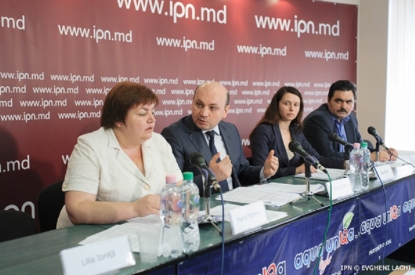
The representatives of the civil society, the National Anti-Corruption Centre (CNA) and the National Integrity Commission (CNI) explained during a debate at IPN, several concepts proposed to the national legislation on integrity of public persons and combating corruption. The project comes with several legislative modifications. It was elaborated by CNA and checked by the Center for Analysis and Prevention of Corruption.
The CNA representative, Maria Popescu, said that through the modifications proposed it is expressly stated who is liable to the testing of professional integrity and what are the sanctions that can be applied if a public servant fails the test.
The project proposed introduces the concept of "public interest" and establishes the reasoning of criminal punishment according to the gravity and injury caused to the public interest. The CNI representative, Victor Stratila, said that is necessary to explain clear to what is the degree of prejudice of the public interest and at what amount could be applied criminal sanctions for such situations.
According to the current legislation, not declaring of the conflict of interest is examined by the National Integrity Commission, the results being sent to the National Anti-Corruption Centre applying sanctions. Because the term in which sanctions can be applied is limited (up to 3 months), but the process of transmitting information may delay, the CNA proposes that CNI should have the skills and ascertainment of the non-declaration of conflict of interest, but also the application of sanctions.
The President National Council for Participation, Sergiu Ostaf, referred to the new provisions which oblige the public servant to avoid and declare corrupt behavior as an act of favoritism and the preventing of the corruption is one of the guarantees of professional integrity testing. Thus, starting from August this year, public agents will be tested in a virtual situation in which they will propose certain advantages to determine if the respective servant is or not honest.
If the public agent will observe influences from some people to favor certain people, it must notify the superior. If the public agent will not pass the test of professional integrity, the CNAs staff will sent to the address of the head of the institution that his employee failed the test of integrity, and the head will apply the sanctions. These can be only of a disciplinary order under the Labor Code. In the case of the civil servants with special status, they risk the relegation sanctions and release from service.
The President of the Anti-Corruption Alliance, Olga Bitca, said that is attested the activation of the dialogue among public agents and the CNA, and it demonstrates a change of mentality among the public servants. The implementation the draft law will have a significant impact on preventing and combating corruption and the application of disciplinary sanctions on the public servants who do not correspond to the criteria of integrity will contribute to the implementation of the principle zero tolerance to corruption.