Public position on current challenges and situation regarding civil society sector of Moldova[EN]
Pozitia publica privind provocarile momentului si situatia sectorului asociativ din Republica Moldova[RO]
Pozitia publica privind provocarile momentului si situatia sectorului asociativ din Republica Moldova[RU]
Resource Center for Human Rights (CReDO) restates its position on the need to depoliticize and self-regulate nongovernmental organizations on the basis of the internationally recognized ethics principles[1].
[1] CReDO: Nonpolitization and self-regulation of the nongovernmental sector and mass-media http://www.credo.md/pageview?id=605, www.CReDO.md,
On the statement of a group of organizations:
Statement dated March 3, 2017 on the event organized by the National Environmental Center and Resource Center for Human Rights (CReDO)[1] is regrettable as it refused the constituent principle of the consultation with the members of the Eastern Partnership Platform, in essence hiding the elaboration of the declaration and avoiding the dialogue on the possible problematic perception of the event[2].
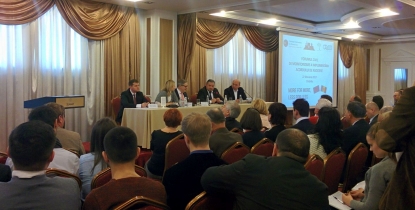
The statement evokes clear erroneous information about the event, as one can easily observe the manner it has been organized to facilitate and accommodate a wide variety of interested actors[3]. The statement avoids the substance of discussions, taken and expressed positions and evaluations on the reforms themselves in energy and justice sector, including of participants, rapporteurs and those who have taken the floor. Participation in the event of some active members of Eastern Partnership Platform implies no obligation to undersign declarations, discussions or information presented from a variety of persons taken the floor. This public event has created affordable opportunity for everyone interested to put forward questions to the representatives of authorities in energy, justice and environmental sectors, hear the evaluations of the co-rapporteurs, expose concerns regarding the progress of the implementation of the Association Agreement. As evidenced by the recordings government, nongovernment representatives as well as opposition and other interested received full chance to express themselves (with more than 100 of participants present, 7-8 questions formulated during plenary sessions for each sector and multiple discussions as part of 3 workshops) – all ensuring democratic pluralism of opinion proving interactive and inclusive character of the event.[4] This unfortunately is not necessary the most practiced format in other public events organized where simply one opinion is presented.
We regret attempts to exacerbate irrational and conspiracy perceptions in the associative sector by fabricating false revenge targets. We regret dishonesty in attributing grant-makers the role of the ultimate judge makers on the personal attitudes of unacceptance of the inclusive and pluralist format of the event. We regret that some assume the unfitted burden of the absolute truth holder, while in the essence project radicalism and refusal, fail the search for understanding of problems’ causes and their relevant solutions as part of the public discussion. We regret attempts to build enemy seeking and which-hunting attitudes – unhealthy signs of blaming rather than thinking – portraying undemocratic intention to suppress pluralism of opinion and drive limited circle group-think based on the approach to be against rather on the approach to search solutions. These attitudes have little added value for the society, they trait the public interest at the expense of shadowing unloyal competition, fears, inflate politization attitudes, show absence of constructive critical engagement[5]. Finally, exclusive focus on the event refusal rather than focus on the substance discussed and the opportunity for the public debate created evokes unfortunate end in itself ...
What follows?
There is a need for direct and open discussion about these problems. There are two ways forward: a) building the image of enemy and portray self-victimization and thus deepening the conflictual relationships in civil society, or b) openly debate existing situation and seek solutions based on the legitimate differences of points of view. The best way forward is obviously to engage into the discussions based on Code of Ethics, acceptance of evidence-based differences of opinions, engagement with evidence-based discussions having the final end the public interest.
[2] Principles of activity of the Eastern Partnership Platform http://archive.eap-csf.eu/assets/files/Documents/StatutesCSF_Secretariatfeb2012_eng%20(1).pdf
[3] 1) Presented reports could be ovserved via the the registration of event https://www.privesc.eu/Arhiva/73577/Forumul-Civic-de-Monitorizare-a-Implementarii-Acordului-de-Asociere-semnat-intre-Uniunea-Europeana-si-Republica-Moldova and materials distributed during the event,
2) Event ensured pluralist caracter offering crossector political and nonpolitical actors platform to voice positions and put forward questions including relevant answers from the public officials, so that a diversity of positions have been expressed with at least 7-8 questions in each plenary panel and plenty of discussions during the workshops,
3) Interested parties had opportunity to participate in workshops to contribute to the final declaration statements pe each sector.
[4] See recording evidence of event https://www.privesc.eu/Arhiva/73577/Forumul-Civic-de-Monitorizare-a-Implementarii-Acordului-de-Asociere-semnat-intre-Uniunea-Europeana-si-Republica-Moldova
[5] See statement 3 March 2017 http://www.ipn.md/ro/comunicate/6439